From 24 rooms in a row to a journey: camps, side rooms and a storm chase
One prompt gave the chapter a shape: a camp for each of five sections, long runs, four side rooms with stamps and a storm chase finale. 37 rooms, all measured. Play before and after.
This is the real result. Click it and play. Open full screen
What we asked“The chapter is 24 short rooms in a row, with almost no room to breathe and no real ending. Turn it into a journey: a calm rest spot at the start of each section, rooms of different lengths with easier stretches after hard ones, a few optional side challenges with a collectible, a chapter map between sections, and a chase finale at the end instead of a boss fight. Don't change how the character moves.”
What happened
- Used the platformer-levels skill
- Read the game and its level files
- Added a fifth section and a camp at the start of every section
- Wrote 13 new rooms: three long runs, four side rooms and the storm chase
- Made the storm run on a fixed schedule so every attempt is the same
- Wrote routes for the new rooms and a chapter-structure test
- Measured all 37 rooms with two random seeds
After part 5 the game looks good and plays well, and it is still 24 short rooms in a row. Players feel that as a test, not a journey. A good chapter rises and falls: breathers after hard stretches, named places, optional extras, and an ending.
Step 9: shape the chapter
The chapter is 24 short rooms in a row, with almost no room to breathe and no real ending. Turn it into a journey: a calm rest spot at the start of each section, rooms of different lengths with easier stretches after hard ones, a few optional side challenges with a collectible, a chapter map between sections, and a chase finale at the end instead of a boss fight. Don't change how the character moves.This was the biggest session: 57 minutes and $9.66, because it adds a section, new systems and 37 rooms to measure. Claude loaded the platformer-levels skill and built:
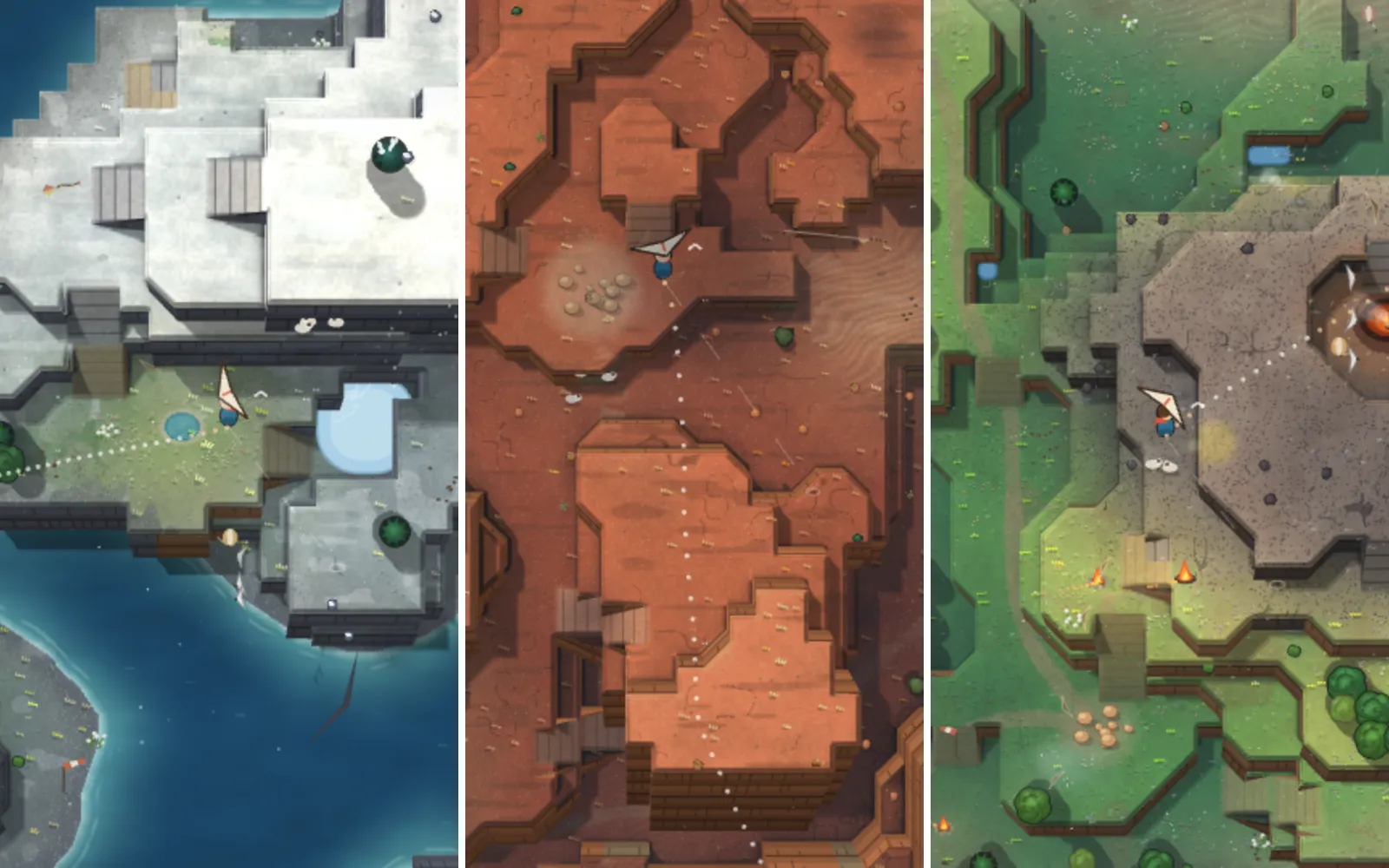
- A camp at the start of every section. A tent, a fire, nothing that can hurt you, and a glimpse of what’s ahead. The game saves there, and reloading the page resumes from the last camp. N at a camp starts a new run.
- A chapter map that shows when you reach a camp: finished sections lit, the current one marked, and the stamps found. It never blocks play and fades once you move.
- Rooms of different lengths. Most rooms last 4 to 15 seconds. Three new long runs last about 19 seconds, with lantern checkpoints partway and an easy stretch at the end. There are never more than three hard rooms in a row.
- Four side rooms, entered through a door on a ledge off the main path. Each holds one stamp that counts only if you carry it out, and is lost if you die. Stamps are never required.
- A storm chase for the finale. The storm rolls in from behind on a fixed schedule: thunder and a 1 to 2 second warning first, and a bright band at the screen edge shows it while it is off screen. Every failure is the storm catching you, so every attempt is the same and the script can measure it. The lead you have shrinks across the three segments, from 2.5 seconds to 1.3 to 0.7. Then the storm breaks, and you walk to the lighthouse at dawn.
The chapter is now five sections and 37 rooms. Here is the shape before and after. Each block is a room, as wide as its clean run takes.
Our chart, from the game's own chapter file. Switch between the 24-room row and the journey. Tap a block for its name.
What it measured
All 37 routes pass, a full playthrough reaches the end without touching the side rooms, and a new test file checks the chapter structure. Every new main room lands inside its target pass rate except two on purpose or near it: Hilltop ramble at 98% (it follows the hard Second wind, so it is meant to be gentle) and Storm front at 91%, just over its range of 60 to 90%. The side rooms run from 55% to 97% for a player arriving there. Crumbling deep is the hardest, and even the skilled simulated player passes only 76%.
The script predicts about 15 minutes for a first-time player on the main path, and 17 with the side rooms.
Play it
Before: 24 rooms in a row, from part 5. Starts at Quarry camp; the rest of the game is ahead of you if you want it.
After: the journey. The Storm Road is the last section, after the Last camp. A full run is about a quarter of an hour, and the game saves at each camp. Starts at Quarry camp; the rest of the game is ahead of you if you want it.
What to take from this
- Name the parts of the shape. “Rest spot, side challenge, map, chase” are things Claude can build and measure. “Make it feel like a journey” is not.
- Make the chase deterministic. A chase that reacts to the player can’t be measured, and can’t be learned either.
- Optional means optional. The playthrough test skips the side rooms on purpose; a collectible nobody must find should never block the end.
Get the skill. Next, the last step: music that follows the player.
The skill that made it work
It treats a chapter as a shape (calm, build, test, rest) and measures every room, including a chase whose schedule never reacts to the player.
- Plan rest spots, long runs and side rooms as part of the chapter, not as extras.
- Make a chase run on a fixed schedule, so every attempt is the same and a script can measure it.
- Measure every new room, side rooms included, and report what the script can't judge.
Save it as .claude/skills/platformer-levels/SKILL.md in your project.
Was this useful?
Thanks, we read every message.
Part 6 of Make a complete platformer with AI