Make a complete platformer with AI
One small platformer, built up part by part with Claude Code: the jump, the levels, then animation, sound, art and shipping. Every part ends with a game you can play.
Get everything
All seven skills below come as one Claude Code plugin. Run these in a Claude Code session:
/plugin marketplace add aigamedev-ai/platformer-kit
/plugin install platformer-kit@aigamedev
- aigamedev-ai/platformer-kit on GitHub
- Start from the same game: template/
- Replay any part: examples/
What you'll make
The game as it stands after part 14. Click it and play. Open full screen
The parts
-
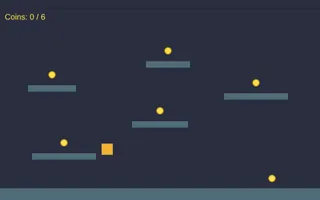 Part 1. Coyote time: the jump fix players never notice To show the difference, we started from our double-jump game with coyote time switched off. Claude Code turned it on and tested it. Play both versions and see what we measured.
-
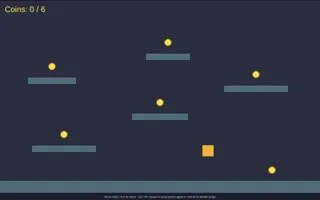 Part 2. Jump buffering: when an early jump should still count In our Phaser platformer, pressing jump just before landing spent the double jump. Claude Code made the press wait for the ground. Play both versions and see what we measured.
-
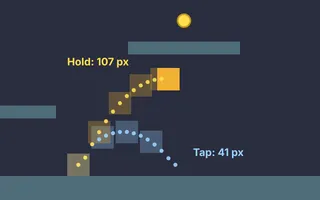 Part 3. Variable jump height in a Phaser platformer: tap to hop, hold to jump high Tap for a small hop, hold for a full jump. Claude Code checked the variable jump height in our Phaser platformer against a skill, measured it in the browser and left it as it was.
-
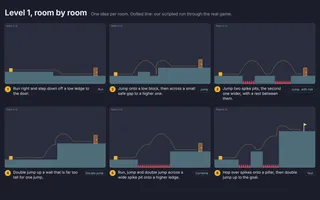 Part 4. Level design with Claude Code: six rooms that teach the jump, using Celeste's rules We asked Claude Code for a six-room first level that teaches run, jump and double jump. Play the result, see each room's story and jump numbers, and compare it with a run without the skill.
-
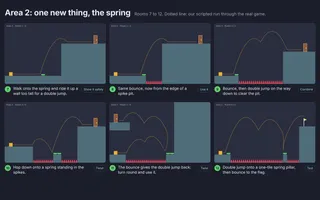 Part 5. Growing a game: adding a spring pad across six rooms with Claude Code We asked Claude Code to add a second area to our platformer that brings in one new thing, a spring pad. See the plan of all 12 rooms, play the game and see what we measured.
-
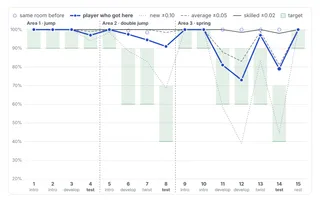 Part 6. Difficulty that grows with the player: measuring every room with simulated players We asked Claude Code to check how hard each room is for new, average and skilled players and reshape the game into waves. See the measured curves before and after, and play the 15 rooms.
-
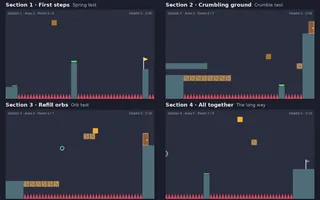 Part 7. A full chapter with Claude Code: 34 rooms, two new mechanics and how they combine We asked Claude Code to grow our platformer into a four-section chapter with crumbling blocks and refill orbs, one session per section. Play all 34 rooms and see what it cost.
-
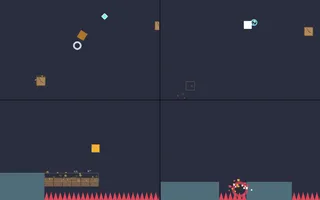 Part 8. Making the chapter feel alive: game juice with Claude Code in one prompt One prompt and a skill gave every jump, landing, spring, crumbling block, orb and death in our platformer a visual reaction, with gameplay unchanged. Switch each effect on and off in the real game.
-
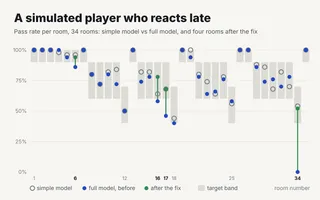 Part 9. When the simulated player reacts late: re-measuring and refining the chapter Our difficulty script now models reaction time, busy hands and errors that run together. One prompt had Claude Code re-measure the 34-room chapter and fix the four rooms that missed.
-
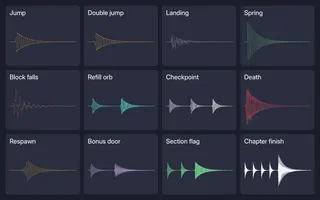 Part 10. Sound effects in one prompt: 17 sounds made in code, no audio files One prompt and a skill gave every jump, landing, spring, crumbling block, orb, death and door in our platformer its own sound, generated with Web Audio. Hear each one, then play with sound.
-
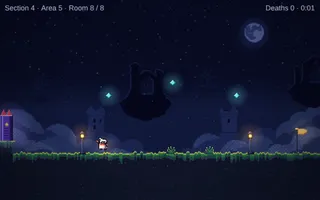 Part 11. Pixel art with Claude Code and a local image model: from squares to night ruins One prompt and a skill turned our platformer's coloured squares into night ruins above the clouds, with a lantern-bearer hero, mossy edges and a starry sky. Drag the slider to compare, then play it.
-
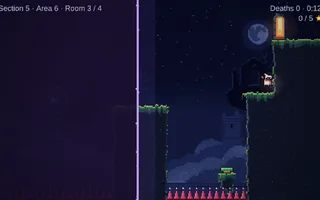 Part 12. From 34 rooms in a row to a journey: rest spots, side challenges and a storm chase One prompt and a skill gave our platformer chapter a shape: five sections with rest spots and a map, calm rooms, long runs, side rooms with stars, and a storm chase finale. Play it.
-
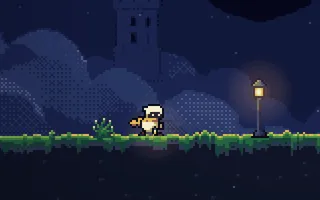 Part 13. Animating the hero with numbers measured from Celeste, Hollow Knight and Shovel Knight We measured three loved platformers frame by frame, put the numbers in a skill, and one prompt gave our hero a calmer run, a steady head and a scarf that reads. Play it.
-
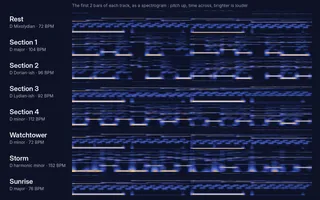 Part 14. An adaptive soundtrack in code: one theme, eight tracks, no DAW One prompt and a skill gave our platformer eight chiptune tracks written as notes in code, all on one theme, that follow the player from room to room. Hear them, then play.
Coming next: Shipping it.
Skills this series uses
Each one is a small file you put in your project so Claude Code follows the same rules we did. The plugin above has all of them. To add just one, download its zip.
- platformer-feel Used in parts 1 to 3
Coyote time, jump buffering and variable jump height, each tested with scripted key presses.
- platformer-levels Used in parts 4, 5, 6, 7, 9 and 12
Rules for rooms that teach one thing at a time, and a script that measures how hard each room is.
- game-juice Used in part 8
Dust, squash, flashes and screen shake, drawn on top so the game plays exactly the same.
- game-sound Used in part 10
Sound effects generated in code for every event, with a mute switch.
- pixel-art Used in part 11
Pixel art drawn in code, edge-band terrain and image-model backgrounds, without changing how the game plays.
- character-animation Used in part 13
Run, head and scarf rules measured frame by frame from Celeste, Hollow Knight and Shovel Knight, and before/after filming, without slowing the controls.
- game-music Used in part 14
An adaptive chiptune soundtrack written as notes in code, one theme in every track, following the game bar by bar.