Make a platformer with AI: the whole path, in ten steps
From an empty folder to a 37-room platformer with art, sound and music: ten steps and seven skills, each one a real Claude Code session. The prompts, what they cost and what they measured.
This is the real result. Click it and play. Open full screen
Before you start
- Claude Code installed and working. Choose your tools shows how.
- The skills, as one plugin. In a Claude Code session run
/plugin marketplace add aigamedev-ai/platformer-kit, then/plugin install platformer-kit@aigamedev. - An empty folder with
phaser.min.js(Phaser 3.80.1) in it. Open Claude Code there.
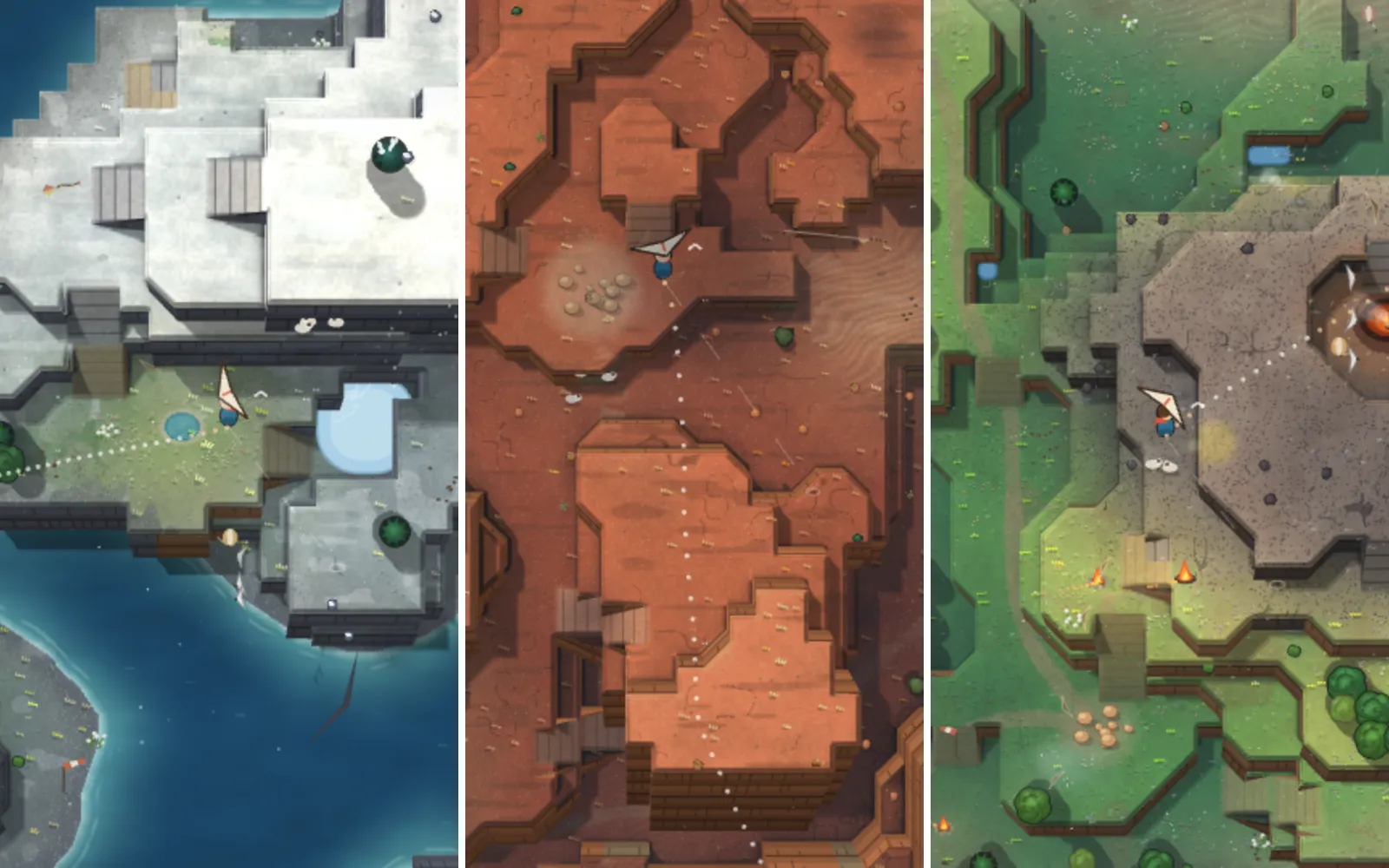
This is the short version. We built one game, Fox Courier, from an empty folder in ten steps and thirteen fresh Claude Code sessions, using only the skills in the platformer kit. The game above is the result: 37 rooms in five sections, with art, effects, sound and music. It took about five hours and $40 of Claude Code time in total.
Every prompt below is the one we used. Each session started from the game the last one made, played its own game in a headless browser to check its work, and loaded the matching skill without being told. The seven posts have the full story of each step: playable before and after versions, and what Claude measured.
| Step | Say this (shortened) | Skill it loaded | Result | Time and cost |
|---|---|---|---|---|
| 1 | Make a small browser platformer: a fox, double jump, coins, spikes, a flag. Play it yourself in a headless browser. | platformer-feel | A game that runs: 10 checks pass | 10 min, $0.81 |
| 2 | Three prompts: add coyote time; make an early jump press count; tap for a hop, hold for a full jump. Test each. | platformer-feel | Each fix measured, with a run without the skill next to it | 4 min, $1.03 |
| 3 | Turn this into about six rooms that teach run, jump and double jump. | platformer-levels | 6 rooms, every one finishable | 18 min, $2.14 |
| 4 | Add a second area of six rooms around a new spring pad. | platformer-levels | 12 rooms, all inside their targets | 25 min, $4.05 |
| 5 | Add crumbling blocks and refill orbs, one file per section; then one prompt per new section. | platformer-levels | 24 rooms in four sections | 79 min, $10.05 |
| 6 | Check each room for a new, average and skilled player and make the game harder in waves. | platformer-levels | 5 rooms changed by a few pixels | 41 min, $1.69 |
| 7 | Make it feel alive on screen. Then: add sound effects, with a mute. | game-juice, game-sound | Effects and 12 kinds of sound, gameplay identical | 22 min, $2.79 |
| 8 | Give the game pixel art in a direction, and give the hero personality. | pixel-art, character-animation | An autumn-forest world and an animated fox | 29 min, $5.87 |
| 9 | Turn 24 rooms in a row into a journey: camps, side rooms, a map, a chase. | platformer-levels | 37 rooms in five sections | 57 min, $9.66 |
| 10 | Write an original soundtrack in code, all on one theme, that follows the player. | game-music | Seven tracks, one theme | 15 min, $2.24 |
The seven posts
- Your first platformer, and a jump that feels right: steps 1 and 2.
- Rooms that teach, and a spring that grows the game: steps 3 and 4.
- A full chapter in four sections, and how hard it is: steps 5 and 6.
- Make it feel alive: effects and sound: step 7.
- Pixel art and a hero that moves: step 8.
- From 24 rooms in a row to a journey: step 9.
- Music that follows the player: step 10.
What this does and doesn’t prove
The claim is that a skill makes Claude Code’s result better. We checked the claim where we could, by running the same prompts in a second folder with no skills, from the same game:
- Jump fixes (post 1): both versions fixed all three problems. The skill runs were faster on coyote time (66 s against 376 s) and left their tests in the project. The no-skill run found an off-by-one in the coyote timer that the skill run missed.
- Rooms (post 2): both levels can be finished. The skill’s rooms teach with no text and come with a pass rate per room. The no-skill rooms put a sign in each room and have no difficulty numbers.
- Pixel art (post 5): both gave a playable, unchanged game. The no-skill version is brighter and many will find it prettier; the skill version darkens the backdrop to make the play area stand out. We cannot say which is better. Play both.
- Steps 5 to 10: no run without the skills. The difficulty measurement, the chase and the music have no no-skill counterpart, because the skill’s script is the thing being tested.
So the honest summary is that the skills add measurements and consistency, not magic. Without them Claude Code made a good jump fix and a playable level, and in one case a nicer-looking picture. What it did not do on its own was say how hard each room is, or keep a test around.
What we can’t show: that a stranger enjoys the game. Nothing here has been played by someone else. The simulated players measure timing, not whether a room is confusing or fun, and the sounds and music were checked by measuring, not by ear.
Start with post 1, or copy the prompts from the posts into Claude Code one at a time, in order.
Was this useful?
Thanks, we read every message.