From one sushi bar to a chain across Japan: six cities, each with its own local sushi
One prompt and a skill grew our pixel sushi bar into a six-shop chain: a conveyor belt in Osaka, pressed masu-zushi in Toyama, a fish market in Kanazawa, seasons in Sapporo and night rushes in Fukuoka, plus managers, saving, earnings while away and real credits. Part 5.
What we asked“Grow Neta into a sushi chain. When the first shop hits its wall, let players open new restaurants in other cities in Japan, each with its own look, local fish and a twist taken from that region's real sushi, and end the game after a handful of shops with a real ending. Add managers that take over the chores, saving, and earnings while the player is away.”
What happened
- Loaded the restaurant-chain skill and its notes on Japan's regional sushi
- Designed six shops, each with local cards, a signature dish, three goals and a twist that changes how it plays
- Built the twists into the simulation: a conveyor belt, a six-slice press, a daily fish market, seasons and night rushes
- Extended the bots from part 4 to play the whole campaign, shop by shop
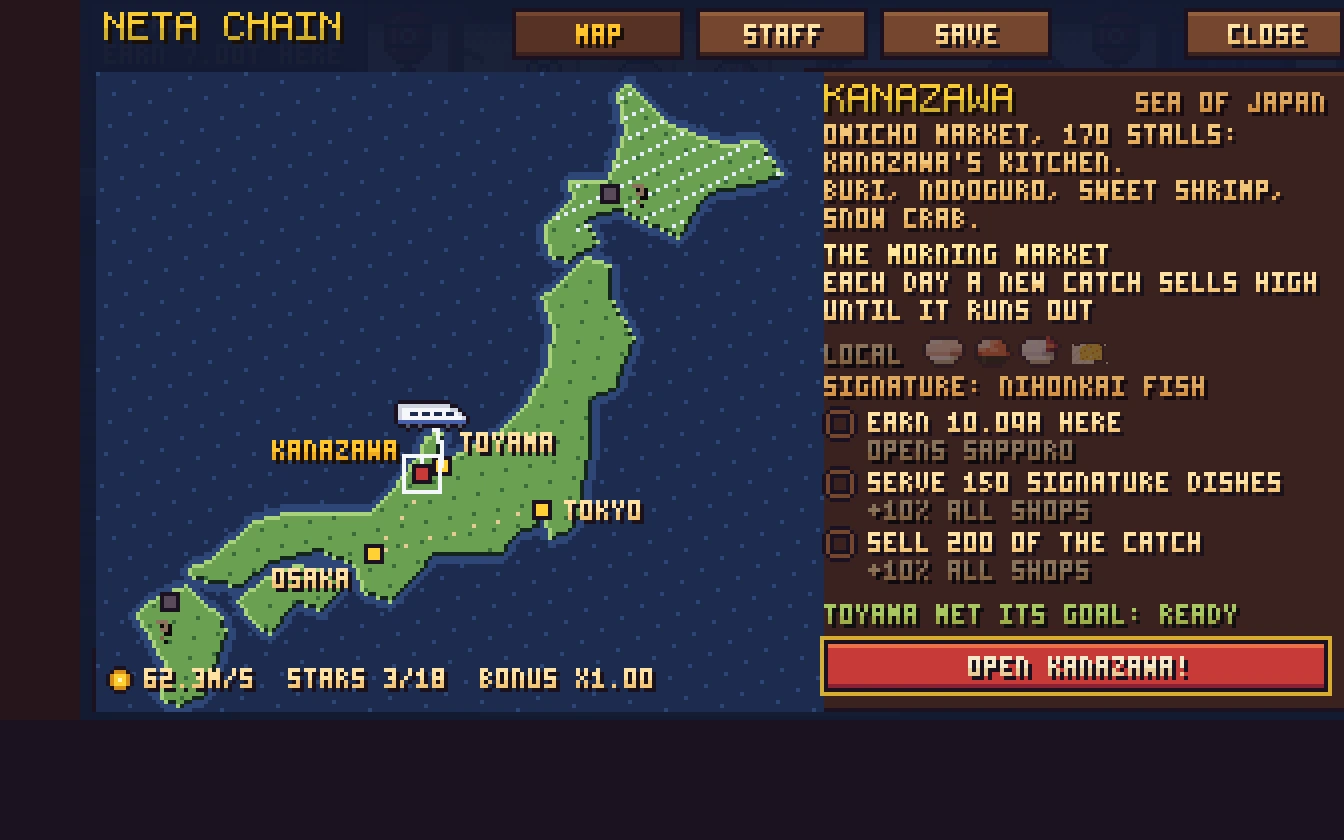
- Drew a pixel map of Japan from real coordinates, with a bullet train between cities
- Built saving with backups, export and import, the welcome-back card, managers and the credits
- Tested saves: a round trip, a damaged save, a save from an older version, and clocks that go backwards
- Checked every shop and screen in a real browser at 720 px wide and on a phone
In part 4 the first shop grows for about an hour and then hits a wall on purpose. This is what breaks through it: more shops. Games add locations in two ways. AdVenture Capitalist's Moon and Mars run side by side forever, while Eatventure and Two Point Hospital give each place a goal and send you on to the next. For a game you can finish, the second way works better, so that is what the skill asks for. Every new shop is a short level, and finished shops keep earning in the background.
Play the chain
Tap the sign in the top-left corner to see the map and your goals. The game now saves on its own (export and import are on the map, under SAVE). To peek at another city without playing there, open the game with ?shop=osaka, toyama, kanazawa, hokkaido or fukuoka. Open full screen
1. Six cities, six twists
Each shop needed its own identity, so the skill points Claude at real regional sushi. The twists come from what each place is known for, and each one changes how you play:
| City | Known for | Twist |
|---|---|---|
| Tokyo | Edomae nigiri and cured fish | inventing dishes on the prep board (parts 1–4) |
| Osaka | pressed box sushi; conveyor-belt sushi was born here in 1958 | a conveyor belt: the chef cooks without orders, guests grab what they like, unwanted plates go stale |
| Toyama | masu-zushi, cherry salmon pressed in bamboo leaves | one press makes six slices that go stale, so a short menu wins |
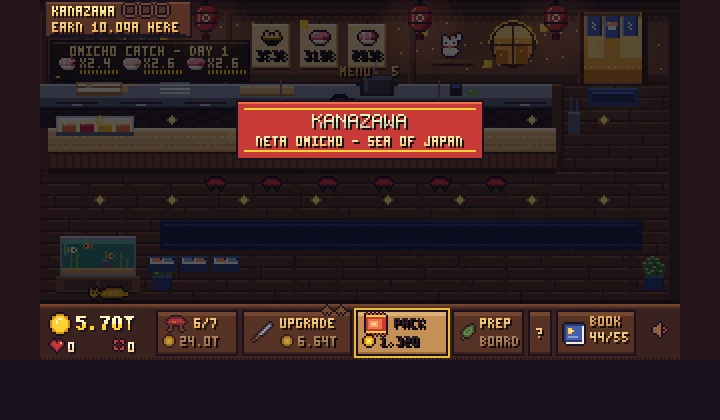
| Kanazawa | Omicho Market, "Kanazawa's kitchen" | each day three fish sell high until the catch runs out |
| Sapporo | Hokkaido crab, uni and ikura | the best fish rotate with the four seasons |
| Fukuoka | Hakata's night food stalls and goma-saba | quiet nights broken by rushes, and a CALL OUT button to start one |
Sources: conveyor belt sushi, Osaka's box sushi, regional styles, Kanazawa, Hokkaido's seasons, goma-saba.
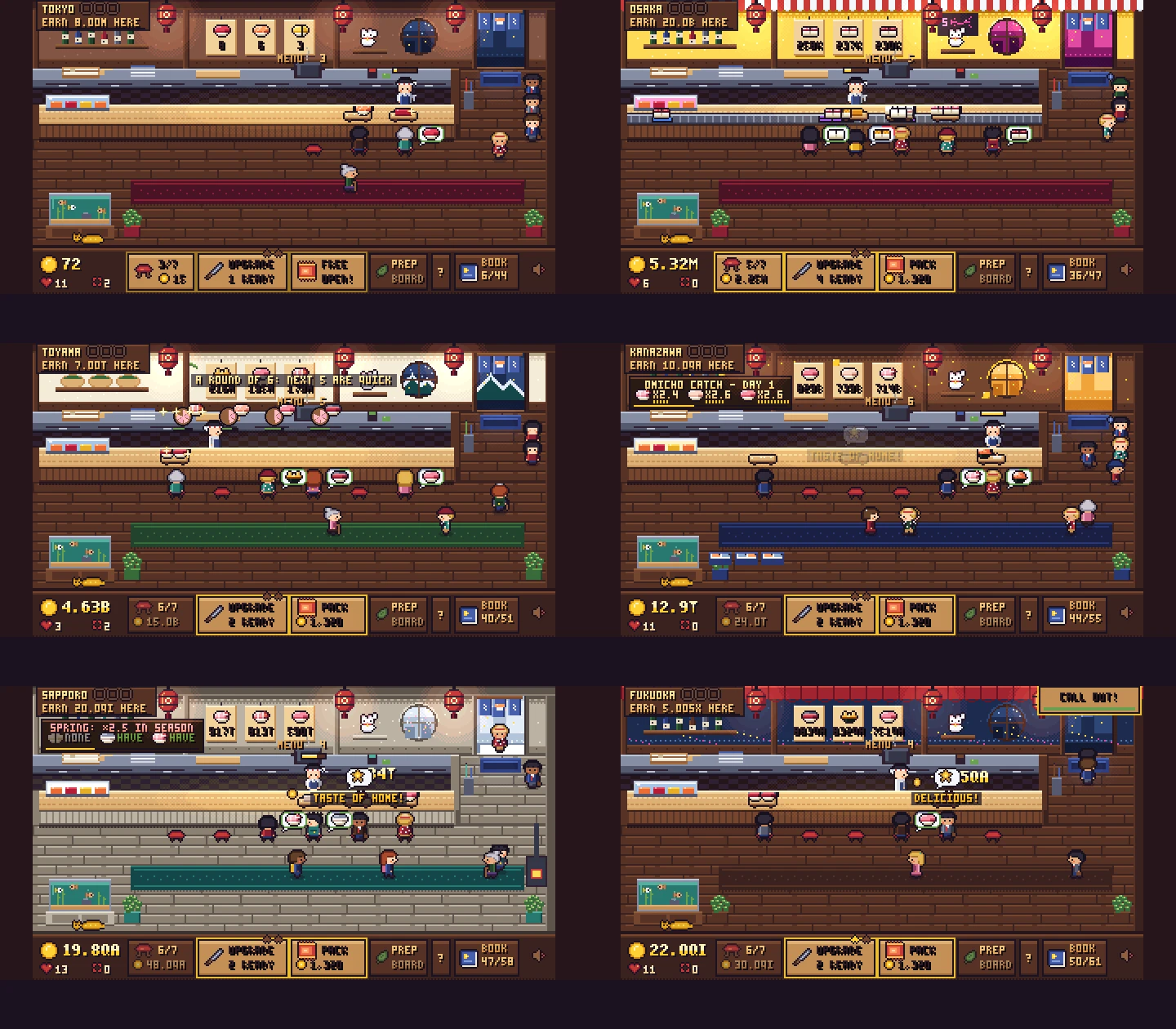
As you can see, the six rooms share one layout with different colours, signs and props. Making them really different places is the job of the art part later in the series.
2. A goal, then the next city
Each shop has three goals, shown as seals on its sign. The first opens the next city, like Two Point Hospital's first star. The other two are optional and add 10% to prices across the chain. Coins, cards, the rule journal and staff carry over; upgrades start again, with a fast start so a new shop never feels like starting from zero.
Opening a city is its own small moment: a bullet train crosses the map, the sign drops in, the lights come on and a free pack of local cards opens.
3. Managers take the chores
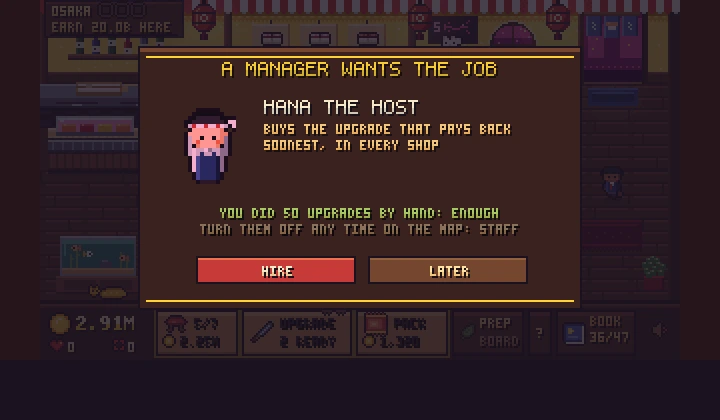
AdVenture Capitalist and Idle Miner Tycoon use managers to take a click off your hands once you're done with it. Neta has three: a buyer, a host and a head chef. Each one only offers to work for you after you've done that job yourself for a while:
4. Saved, and earning while you're away
The game now saves every 30 seconds and when you leave the tab, keeps backups and lets you export the save as text. That matters in a browser: Safari can clear a site's storage after seven days without a visit (Search Engine Land). Claude tested the save on purpose: a round trip, a damaged save that loads a backup, a save from an older version, and clocks that go backwards, which pay nothing.
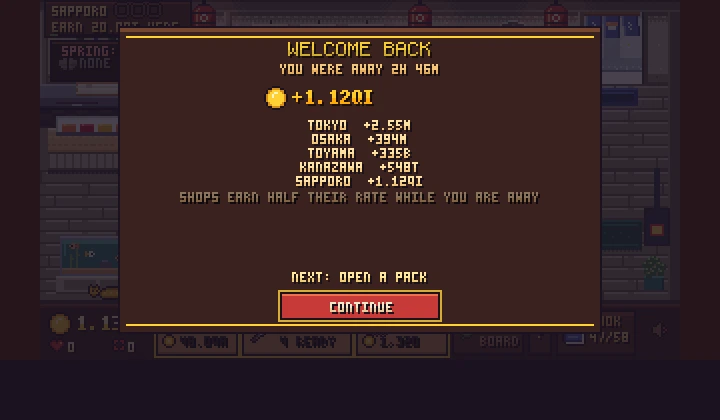
When you come back, the shops have earned half their normal rate for up to four hours, shown on one card:
5. A real ending
Most incremental games never end, but some of the best-loved ones do: Universal Paperclips takes about six and a half hours, and most players finished it (overbaked.studio). Neta now ends when the sixth shop meets its goal: credits roll with a summary of your chain, and then you can keep playing or start a new season with a bonus.
The bots from part 4 now play the whole campaign. A player who always buys the best deal reaches the credits in 2 hours 40 minutes, and one who always buys the cheapest thing in 3 hours 39. Each city takes 21 to 34 minutes, and no city takes more than 1.35 times as long as the one before it.
What it cost
One prompt, no follow-ups: 64 minutes and $19.20 of Claude Code working alone, the biggest part so far, starting from the part 4 game.
Claude listed the calls it made that we might want to change. Each city got its own upgrade line, because your cards carry over and the later cities were too short without one. Packs stay cheap in later cities, so the card book fills up mid-game. And as noted above, the six rooms are recolours of one layout.
Next: juice, sound and music
With managers running six shops, a lot happens at once. In part 6 every sale, purchase, pack and new city gets the right weight, nothing turns into noise, and each city gets calm music you could leave on for hours.
Grow your own game
- Copy the skill below into
.claude/skills/restaurant-chain/, or download it with its references. - Ask your agent: "When my first location hits its wall, let players open new ones, each with its own twist, and end the game with real credits. Add managers, saving and offline earnings."
- Check its report: minutes per location (no big jumps), total time to the credits, and the save tests.
The skill that made it work
This is the skill we gave Claude Code. The full version has two reference files: Japan's regional sushi styles with sources, and saves and offline earnings. Copy the rules below, or download it with its references.
- A short campaign of shops. About 5–7 shops, each 20–35 minutes of play, ending in credits after 2–4 hours. Each shop has a clear goal shown on screen (stars, like Two Point Hospital: 1 star opens the next shop, 2–3 stars are optional and give a small bonus for the whole chain). The player can go back to any shop.
- Each shop is a different place. Its own look (palette, room layout, props), 3–5 local ingredients, one signature style and one twist mechanic, all from real regional sushi (see references/locations.md): Tokyo Edomae (cured fish), Osaka (pressed box sushi, and the conveyor belt was born there), Toyama (masu-zushi), Kanazawa (Sea of Japan fish, a market), Hokkaido (crab, uni, ikura, seasons), Fukuoka (goma-saba). A twist changes how you play, not just the numbers.
- What carries over, what resets. Keep cards, discovered recipes and the collection. Reset seats, staff and shop upgrades. A new shop starts with a short fast start (about the income the previous shop had after 5 minutes) so it never feels like starting from zero.
- Finished shops keep working. A shop that reached its goal runs automatically and adds its income (or a share, 5–10% of the chain's) while the player is elsewhere. Show it on a chain map.
- Managers take over chores. Hiring a manager (a chef, a host, a buyer) removes a repeated click: auto-serve, auto-restock, auto-open the cheapest pack. Unlock each one after the player has done that task by hand for a while, and put it next to a milestone so it feels like a reward.
- Opening a shop is a moment. A 3–5 second celebration: the chain map, the train or walk to the new city, the new shop's sign going up and lights coming on.
- Offline earnings. On return, a welcome-back card: time away, coins earned, what managers did, and one suggested next step. 50% of the online rate, capped at about 4 hours. No ad to double it. Ignore clocks that went backwards; never earn for shops that aren't open.
- Saves that don't lose progress. One versioned JSON save with a migration chain. Autosave every 30 s, when the tab is hidden and before unload. Two rotating backups, export and import as a text string, and ask the browser for persistent storage. Warn in settings that Safari can wipe site data after 7 days without a visit; the export string is the fix.
- A real ending. Reaching the last shop's goal plays credits and a chain summary (shops, sushi invented, plates served, time played). After the credits the player can keep playing, and optionally start a "new season" with a small bonus.
- Measure it. Extend the economy bots to play the whole campaign: time to each shop's first star (no shop more than about 1.5× its neighbours), total time to the credits, longest gap with nothing to do, and that the fast start works. Test save, reload, export/import and offline earnings with a faked clock. Check the chain map and each shop in a real browser at 720 px wide and on a phone.
Save it as .claude/skills/restaurant-chain/SKILL.md in your project. Put the references folder next to it.